
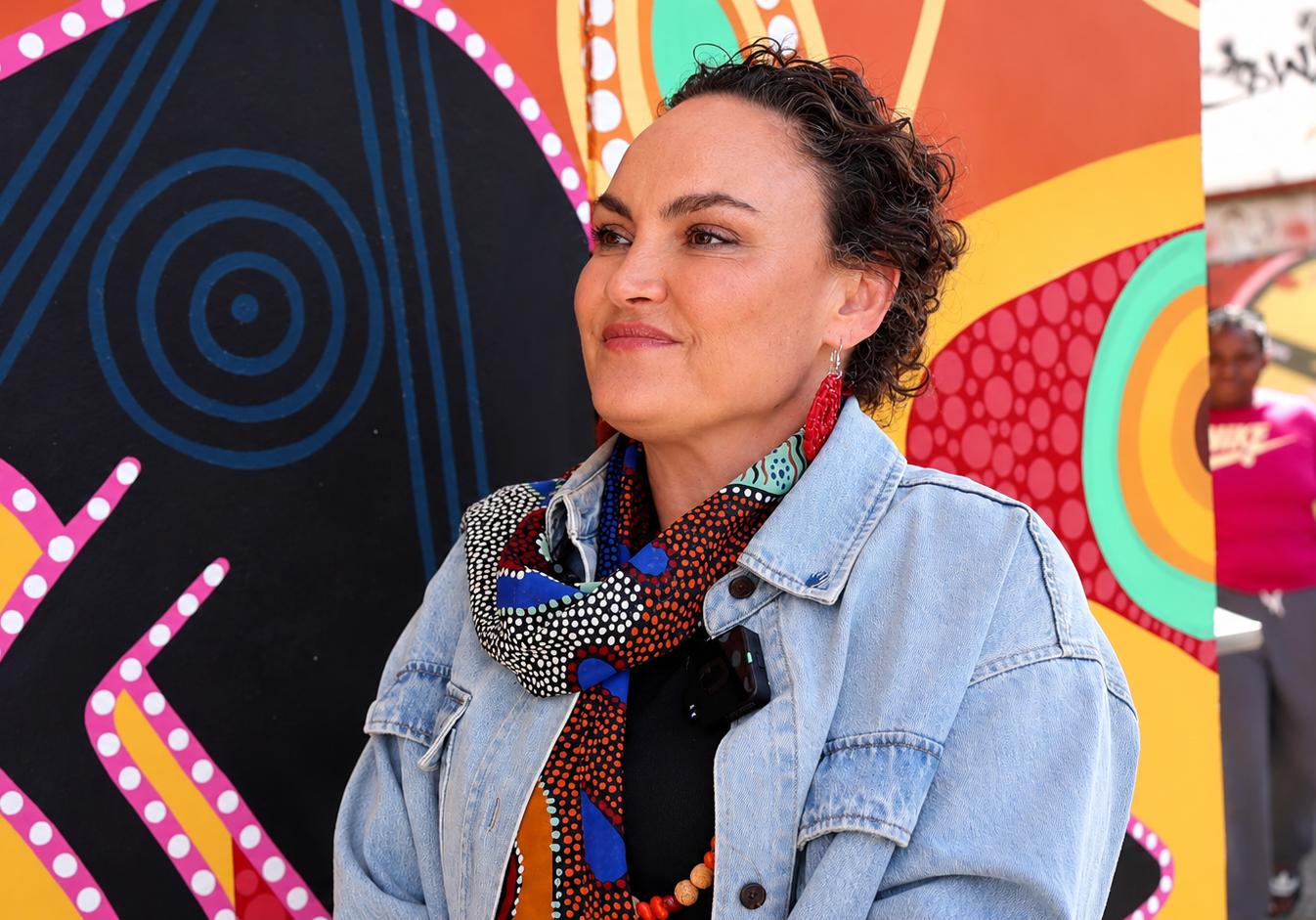
On Brisbane’s Boundary Street, a small community kiosk is helping transform a place with a history of exclusion into a welcoming space for connection, culture and belonging.
For First Nations people especially, Boundary Street carries particular historical significance. Once associated with boundaries that restricted where First Nations people could go, today the street is home to Kurilpa Kiosk, a community space activated by local Neighbourhood Centre organisation Community Plus Queensland.
Kylie Deen, First Nations Lead at Community Plus, helps bring the space to life through activities that welcome “anybody and everybody”.
“We come down here Tuesday to Friday, activate space, do the same thing that we would do at our other Community Centres, information referral, create culturally safe spaces for people to gather,” Kylie explains.
With music groups, community barbecues and opportunities to access information and support, the kiosk provides a place where people can gather, connect and feel welcome.
For Kylie, the location makes this work especially meaningful.
“Boundary St was one of the exclusion zones for many years,” she explains, reflecting on the street’s history and the restrictions once placed on First Nations people. “There’s many boundary streets within Australia where you would find that First Nations people were excluded and this was the boundary that kept certain mob on certain sides.”
The kiosk itself also has a rich cultural history, having previously been associated with First Nations radio station 4AAA Murri Country.
Creating culturally safe spaces
Kylie believes Neighbourhood and Community Centres have an important role to play in ensuring First Nations people feel acknowledged, respected and culturally safe.
Small, visible gestures can make a meaningful difference, from displaying Aboriginal and Torres Strait Islander flags and acknowledging Country to celebrating culture through artwork and community activities.
“I think for us as mob, when we see that on display, we get that sense of OK, I feel acknowledged and I feel culturally safe in these spaces.”
But creating genuine inclusion goes beyond what people see when they walk through the door.
Kylie encourages Centres to build relationships with local Elders, consult with Aboriginal and Torres Strait Islander communities, establish First Nations advisory groups and employ First Nations staff, creating a First Nations Advisory Board and employing First Nations staff.
“I also really encourage organisations to get to know their local elders, their local Aboriginal entourage under elders as well. It’s really important,” Kylie explains. “Creating a First Nations Advisory Board, and employing First Nations staff encourages more people.”
These actions help create spaces where cultural inclusion is embedded in everyday practice.
Celebrating culture every day
During NAIDOC Week, Kurilpa Kiosk hosted a community breakfast in partnership with Ya’Djin Women’s Collective and Drug ARM, bringing people together to celebrate culture and celebrate a new mural at the site.
Families gathered before heading to the annual Musgrave Park Family Fun Day, one of Brisbane’s major NAIDOC Week celebrations.
For Kylie, who celebrated her 50th birthday in the same year as NAIDOC’s 50th anniversary, the milestone held special meaning.
“It’s our Elders leading the way. It’s our, you know, the people that have made organisations and really been part of a movement.”
While NAIDOC Week provides an important opportunity to celebrate First Nations histories, cultures and achievements, Kylie emphasises that cultural recognition and connection should extend throughout the year.
“It’s just so special that we can uplift our culture. But not just for NAIDOC Week, for every other day of the year as well.”
At Kurilpa Kiosk, that commitment is reflected in the everyday work of creating a place where people can gather, share stories, access support and feel a sense of belonging.
On a street once associated with exclusion, that sense of welcome carries particular significance.